The best time to visit Western Sichuan, month by month
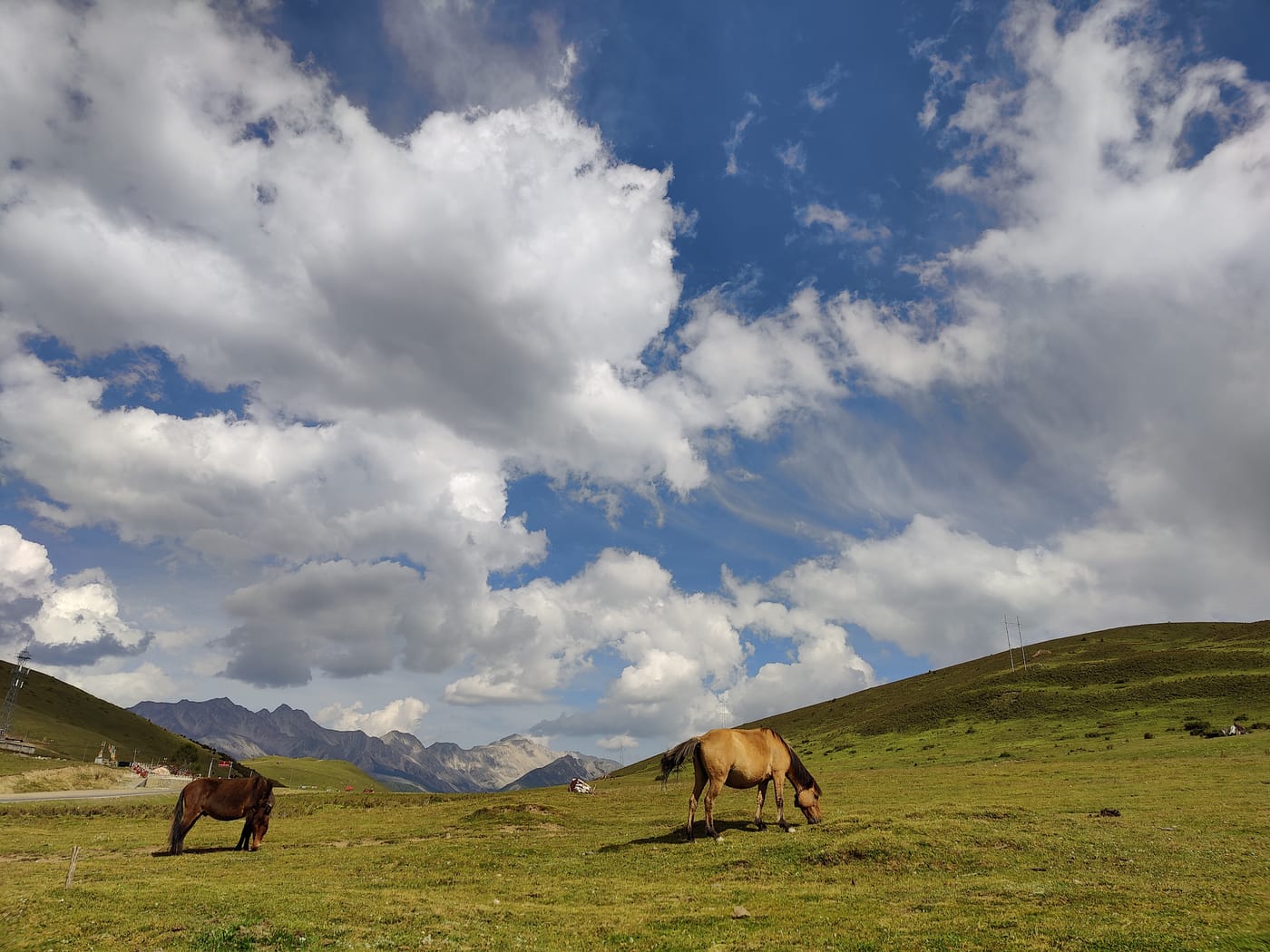
Spring flowers, summer grasslands, autumn colour and hard winter light — what each season actually looks like on the ground, and which one suits the trip you want.
The short version
For most travellers, late May to early October is the sweet spot. The grasslands are green, the passes are reliably open, and the days are warm enough to sit outside.
Mid-October to mid-November is the photographer's season: golden larch and poplar, sharp clear air, and far fewer people. It gets cold at night.
Winter and early spring are quiet, cheap and beautiful in a stark way, but some high passes close and many guesthouses shut.
Spring — March to May
March is still winter at altitude. Passes can close without warning and the grasslands are brown. By April the low valleys are warming up and apricot and peach blossom appears around Danba and the Dadu River valley.
May is when the season genuinely opens. Grass begins to green, days are mild, and the roads are dependable. If you want flowers without the summer crowds, aim for the second half of May.
Summer — June to August
This is peak grassland season. Tagong and the Zoige marshes are vivid green, yaks are out in numbers, and nomad families are living in their summer camps — which is what makes our nomad homestay work best in these months.
It is also the rainy season. Expect afternoon showers rather than all-day rain, and occasional landslides on the mountain roads. Mornings are usually clear, so we front-load the scenic driving.
Summer is peak domestic holiday time, especially during the July and August school breaks. Book accommodation well ahead and expect popular viewpoints to be busy at midday.
Autumn — September to November
September and early October combine green grasslands with stable weather, and are arguably the best all-round months. Skies are clearer than in summer and the rain has eased.
Mid-October onwards brings the colour change. Larch turns gold across the high valleys and the light becomes cleaner and harder. Nights drop below freezing at altitude.
The first week of October is a national holiday and the busiest travel period of the year in China. Unless you specifically want the festival atmosphere, travel either side of it.
Winter — December to February
Winter is dry, cold and extremely clear. Snow-covered peaks against deep blue sky make it a favourite for landscape photographers, and prices are at their lowest.
The trade-offs are real: some high passes close after snowfall, many family-run guesthouses shut, and daytime temperatures at 3,700 m can stay below freezing. Our nomad homestay runs only in the warmer months for this reason.
If you do travel in winter, build in slack. A closed pass can add hours to a drive, and flexibility matters more than a fixed schedule.
Festivals worth planning around
Tibetan New Year (Losar) falls in February or March depending on the lunar calendar and is the most important festival in the region. Many businesses close as families celebrate at home, but the atmosphere in towns like Kangding is extraordinary.
Horse racing festivals on the grasslands usually take place in summer, often around July or August depending on the locality. Dates vary by county and are confirmed late, so ask us if you are planning around one.
Monastery festivals with masked cham dances happen at various points in the year. These are religious ceremonies rather than performances, and visitors are welcome to watch respectfully.
In this guide
What is the single best month for a first trip?
+
September. The grasslands are still green, the summer rain has passed, skies are clear and the roads are dependable. It is also less crowded than July and August.
How cold does it get at night in summer?
+
At 3,700 m, expect single digits Celsius even in July, and close to freezing on clear nights. Bring a warm mid-layer and a windproof outer shell regardless of the season.
Is the rainy season a problem for travelling?
+
Rarely. Rain usually arrives in short afternoon bursts rather than lasting all day. The genuine risk is landslides on mountain roads after heavy falls, which occasionally force a route change — we monitor conditions and adjust.
Keep reading
Have a question we have not answered?
Message us on WhatsApp and a real person will reply — usually within a few hours.
Ask us on WhatsApp