Tibetan culture etiquette: a practical guide for visitors
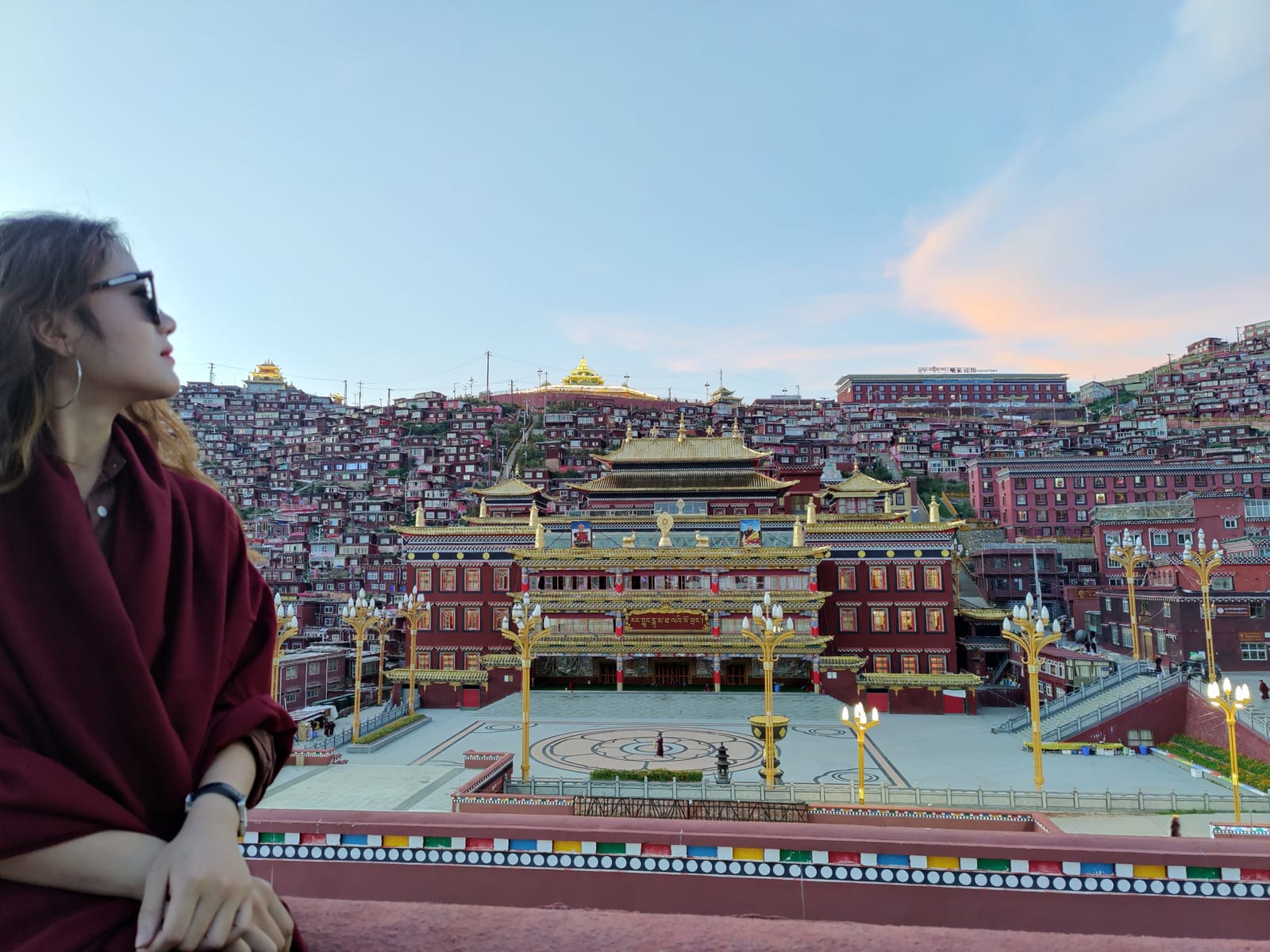
Monasteries, prayer flags, offering scarves and photographing people — the small things that make a real difference to how you are received.
The principle behind the rules
Almost every piece of etiquette in Tibetan areas comes back to one idea: these are living communities and working religious sites, not attractions built for visitors. If you behave as a guest in someone's home and in someone's place of worship, you will get it right the vast majority of the time.
Nobody expects you to know everything. What people notice is whether you are trying.
In monasteries and temples
Walk clockwise around monasteries, stupas and prayer wheel circuits. This is the direction of circumambulation and going the other way is the most common mistake visitors make.
Remove hats inside temple halls. Do not point your feet at statues or towards monks, and avoid sitting with your feet stretched out toward an altar.
Do not touch statues, thangkas or ritual objects, and do not step over them. If you want a closer look, ask — permission is usually given gladly.
Photography inside temple halls is often prohibited and sometimes permitted for a fee. Look for signage, and when in doubt, ask before raising a camera. A monk saying no is not being unfriendly; some rooms hold consecrated objects.
Prayer flags
Prayer flags are printed with sutras and mantras, and the wind is understood to carry the blessings they hold. They are religious material, not decoration.
Do not climb on prayer flag piles for photographs, and do not take flags home as souvenirs. If flags are being raised and you are invited to help, join in — it is a genuine gesture of participation.
Kata, the offering scarf
A kata is a silk or cotton scarf given as a mark of respect and welcome. You may well receive one. Accept it with both hands, and if you are offered it around your neck, bow slightly forward.
If you wish to give a kata yourself, hold it with both hands at chest height. When offering one to a monk or an elder, it is customary to bow as you present it.
Photographing people
Always ask first, even when the answer seems obvious. A gesture toward your camera and a questioning look works perfectly well across any language barrier.
Expect some people to decline, and accept it without pushing. Nomads and older people in rural areas are more likely to say no than younger people in towns.
If you photograph someone and they ask to see the result, showing them the screen is a small kindness that almost always leads to a warmer encounter. Sending a copy later, if you can, is better still.
Be cautious about photographing pilgrims during prostration or prayer. They are engaged in devotion, and a camera in that moment can feel like an intrusion.
Food, tea and hospitality
If you are offered butter tea or tsampa, accept at least a sip or a taste. Refusing hospitality outright is read as rejection rather than a dietary preference.
Butter tea is salty rather than sweet and takes many visitors by surprise. Drinking it slowly is entirely acceptable.
When eating with a family, wait to be told where to sit, and let your host begin first. If you are given the seat of honour, accept it with a nod rather than protesting at length.
Do not touch anyone's head. In Tibetan and broader Buddhist custom the head is considered the most sacred part of the body.
A few practical points
Dress modestly at religious sites: cover shoulders and knees, and avoid very short shorts or vest tops. A light scarf in your bag solves this instantly.
Do not hand money directly to children who ask. It encourages absence from school. If you want to give something, give it to a parent, or contribute to a local school or clinic instead.
Some monasteries and regions have restrictions on photography, drones and certain areas. Regulations do change, and we will brief you on current conditions for the specific places on your itinerary.
In this guide
Do I need to be Buddhist to visit a monastery?
+
Not at all. Visitors of any faith or none are welcome at most monasteries. What matters is respectful behaviour: quiet voices, modest dress, and asking before photographing.
Is it appropriate to give donations at monasteries?
+
Yes, and small notes are perfectly normal. There is usually a box near the main hall. Donations support the monastery and the monks who live there.
Can I take photos of prayer flags?
+
Yes. The sensitivity is about treatment rather than photography. Do not climb on flag piles, drape yourself in them, or take them away as souvenirs.
Keep reading
Have a question we have not answered?
Message us on WhatsApp and a real person will reply — usually within a few hours.
Ask us on WhatsApp